Joshua Knobe, Yale University
Aug. 28, 2026
3-5 p.m.
Gregory Hall 213
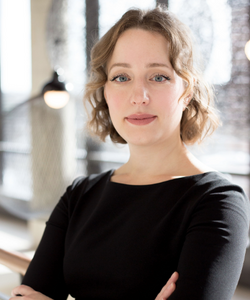
Ashley Atkins, Western Michigan University
Oct. 16, 2026
3-5 p.m.
Gregory Hall 213
On Grief and Survivor's Guilt
Meditation on the fact that one lives on while a loved one is dead is common in grief. In some cases, however, one’s status as one who has outlived another becomes a source of profound guilt. This guilt is sometimes expressed in the sentiment that it was wrong to have outlived the dead but often, and more directly, in the sentiment that one has lived past the point at which one should have died (i.e., when the other person did). My talk sheds light on these experiences by relating them to tragedies of “overliving” in which the central problem is not death or a death that comes too soon, but one that comes too late (e.g., Shakespeare’s King Lear, Eugene O’Neill’s Moon for the Misbegotten).
Like the central characters in these tragedies for whom the boundaries between life and death become blurred and for whom an experience of excessive life seems to be a kind of living death, those who overlive the dead seem to themselves (and sometimes to others as well) neither dead nor fully alive. This is what Joyce Carol Oates describes in A Widow’s Story as a “posthumous existence,” one from which, as this implies, not even death may provide an escape. I will be arguing that grief is an especially potent source for these tragic experiences because it is associated with an obligation to survive those who have died. The examples of overliving that I discuss are guilt-ridden experiences of survival—a kind of survivor’s guilt—that draw our attention to the complexities attending the question of what it means to share the fate of the dead.